Plain Discernment: New Quaker Approaches to Morality, Faith, and Activism
Sharon Street has claimed that normative realism “has become a strange form of religion—a religion stripped clean of everything except the bare conviction that there are independent normative truths that one is capable of recognizing.” I don’t fully endorse Street’s sweeping statement. But it does seem to me that some forms of normative realism—in particular, non-naturalist moral realism—are a bit like religions in that they require a type of faith that is characteristic of religious commitment. So I’ve argued.
Where I differ with Street, though, is that I don’t think it’s at all a bad thing to have that kind of faith. In fact, I think that the peculiar sort of moral faith involved in non-naturalist moral realism is rational and justifiable. Moreover, I think such faith is conducive to (perhaps even indispensable to) having a good human life.
Now, I share hardcore naturalists’ skepticism about supernatural beings (especially ones that are supposed to be causally efficacious yet seem to have left no scientifically detectable trace in the natural world). But I part ways with the hardcore naturalists when it comes to morality.
My view, then, is that (a) non-naturalist moral realism requires a leap of faith, and (b) that’s a leap we should take. Most of my fellow non-naturalist realists will reject (a), and of course most anti-realists and naturalist moral realists reject (b). So, in holding this conjunction of views, I think I’m pretty lonely.*
But these ideas, I contend, are fruitfully resonant with many of the distinctive ideas of the Religious Society of Friends—better known as the Quakers. Quakers “have long traveled with the barest amount of theological baggage,” in the words of David Hinshaw, a Quaker writer. There is very little that one needs to believe in order to be a Quaker. For instance, one does not need to believe in God; many Quakers (in the liberal, unprogrammed tradition) are non-theists. However, Quakerism has at least one defining idea: the doctrine of Inward Light, all versions of which imply that we have within ourselves an ability to distinguish right from wrong.
Might Quakerism be a real-world approximation of the “strange religion” that Street accuses normative realism of being? I argue for a Yes answer to that question in a paper that I’m currently shopping around at conferences, entitled “Moral non-naturalism the Quaker way.” (An extended abstract for this paper is here.) I argue that the Quaker idea of Inward Light has often been spelled out by historical and contemporary Quakers in ways that are not only compatible with, but helpful to, metaethical non-naturalism in the tradition of Moore, Ross, Enoch, and Shafer-Landau.
That paper is part of a larger book project that I’ve got in the works, which I’m tentatively calling Plain Discernment: New Quaker Approaches to Morality, Faith, and Activism. One of my hopes for the book is to show how ideas inspired by Quaker thought and practice can reveal how metaethical questions are importantly and even urgently relevant to moral problems that all of us face in our daily lives.
*=Importantly, there are views in the neighborhood. David Enoch and (quite recently) Bart Streumer have developed arguments that non-naturalist moral realism is somehow indispensable (e.g., deliberatively indispensable (Enoch) or rationally indispensable given our aims (Streumer)). And of course there is a long history in non-naturalist metaethics, stretching from Moore to Shafer-Landau, of treating some of non-naturalism’s posits and commitments as self-evident or primitive. And there are relaxed realists and quietists of various sorts, who (broadly speaking) want to crash the non-naturalists’ party without taking on the metaphysical burdens that are traditionally associated with joining the party. In the conference paper mentioned above, I show that all of those views differ in important respects from the kind of moral faith that I’m exploring in this project.
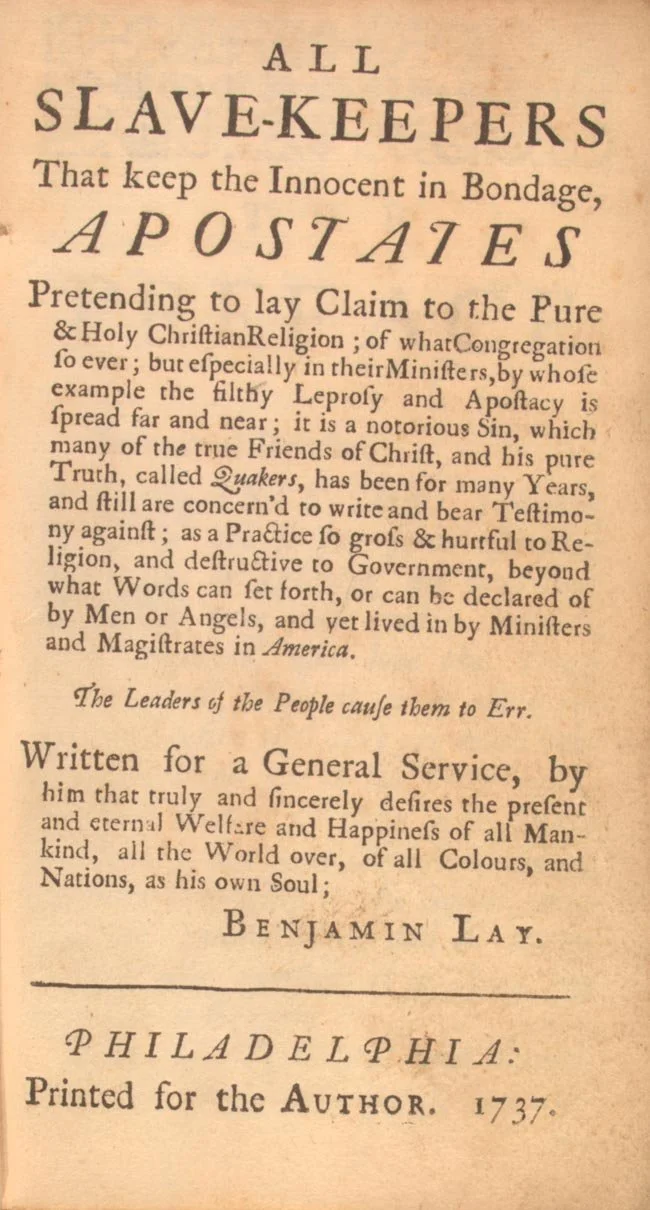
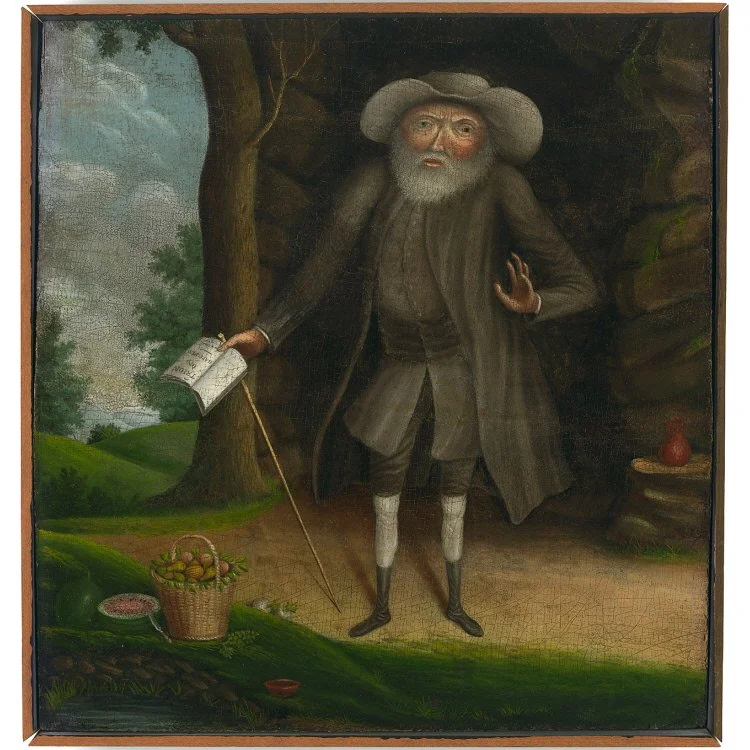
Pictured: Benjamin Lay, an 18th-century Quaker activist who provides some of the inspiration for this project, along with an anti-slavery pronouncement authored by Lay. For a brief discussion that covers some of the reasons why Lay is so likable, see this by Tobias Leenaert.