Philosophy of activism
I haven’t yet published any proper academic work on activism, but I’ve been thinking about (and sometimes participating in) activism for quite some time. I’ve written a bit about the subject in blogs and newspapers:
The Philosophy of Invading a Beagle-Breeding Facility (Daily Nous)
Speaking Through Action: Open Rescue as Moral Assertion (Blog of the American Philosophical Association)
Vegan Activists: Spectacularly Inconvenient but Morally Right (Sydney Morning Herald)
And with Rach Cosker-Rowland, I co-produced an episode of Barry Lam’s award-winning narrative philosophy podcast:
Uncivil Disobedience (Hi-Phi Nation)
My current book project has a lot to do with activism, and I aim to publish a few journal articles along the way toward completion of the book. I am currently hard at work on a journal article that I’m co-authoring with Aaron Yarmel, tentatively entitled “Open Rescue: Its Levels, Method, and Point.” (The subtitle is of course an affectionate nod to Hare.) If you’re unfamiliar with open rescue, this Wikipedia article is a good introduction.
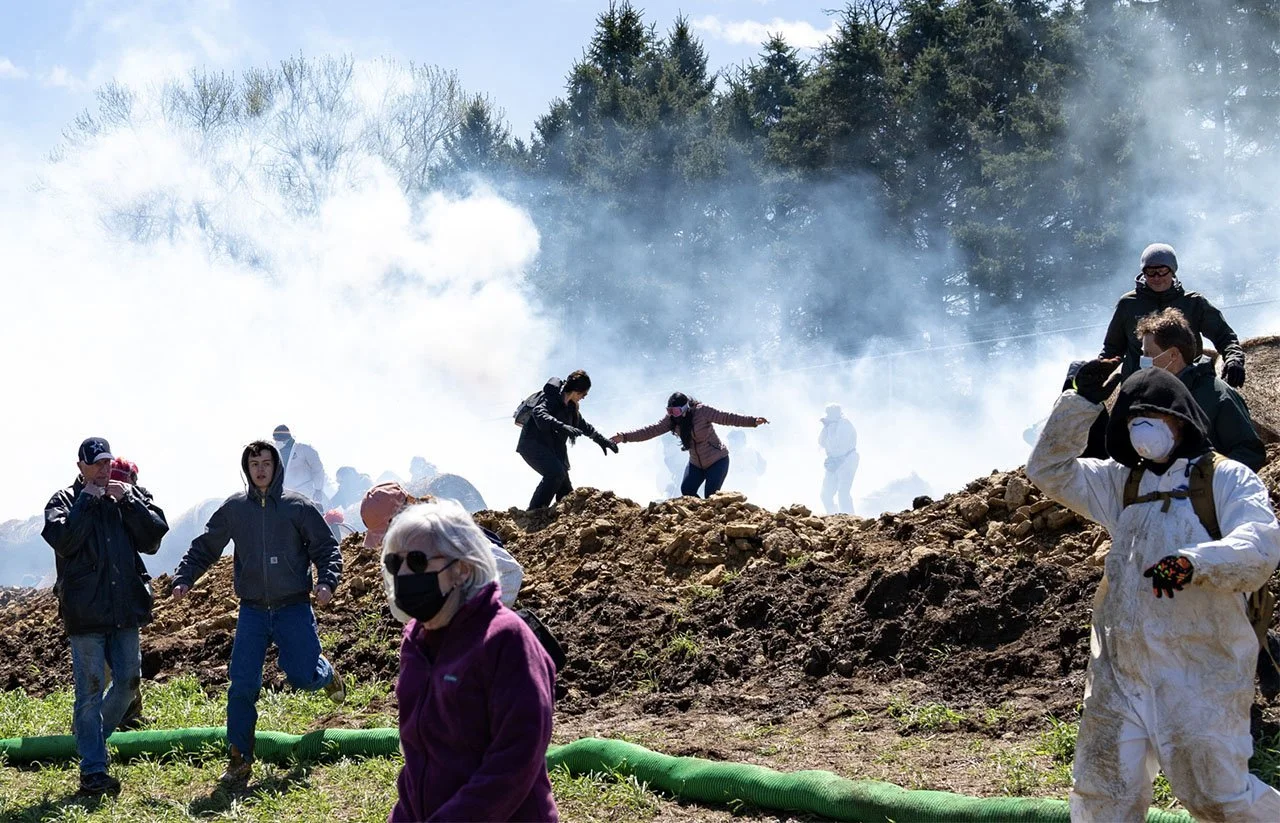
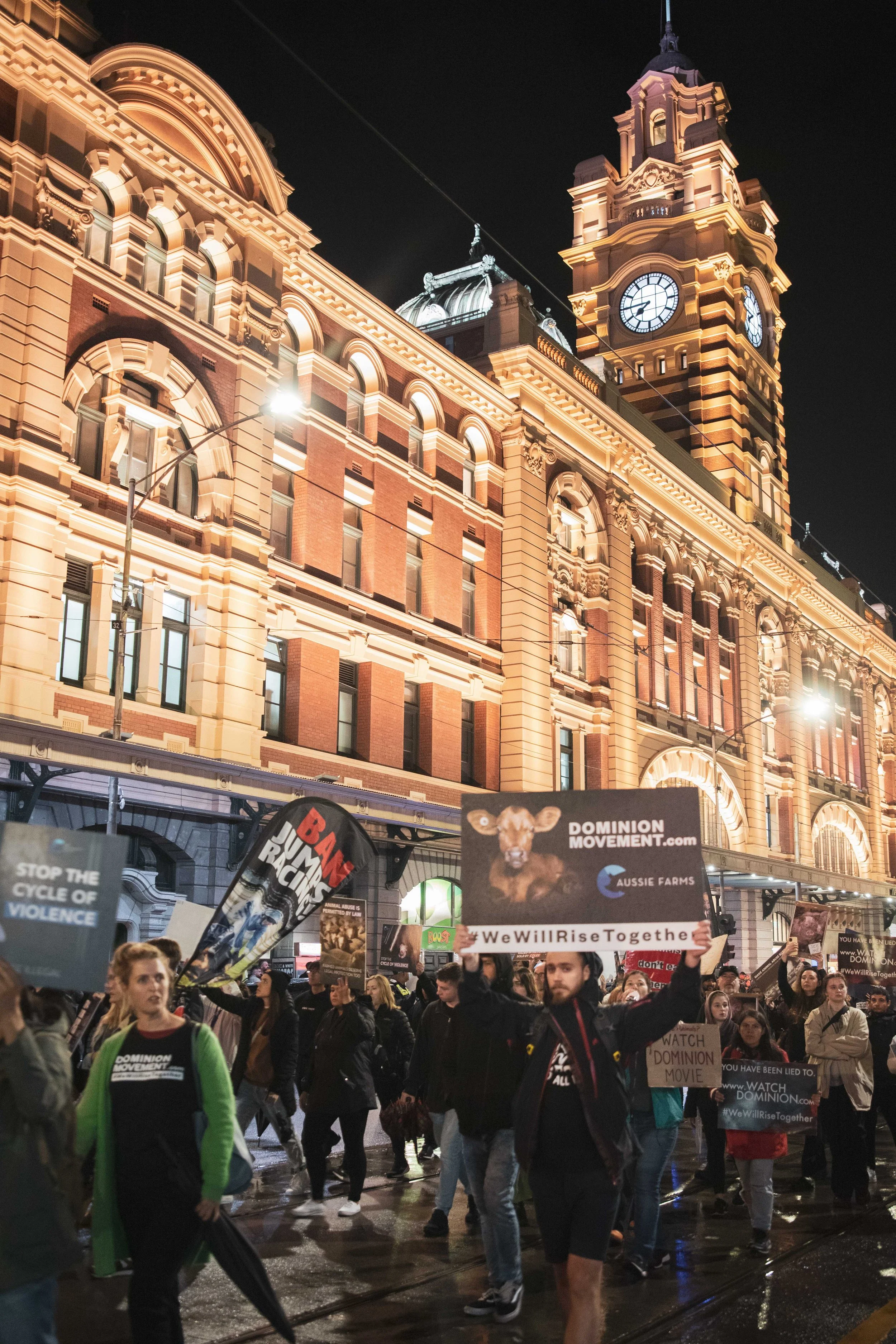
Pictured: A street protest in Melbourne CBD in July 2023 (top right); and an open rescue attempt that occurred at Ridglan Farms in Wisconsin in April 2026 (bottom left).
Although I have particular interests in animal activism, much of my current thinking is about issues concerning activism in general. To begin with, what the heck is activism?
For a variety of reasons (including contingent facts about the history of activism in the 20th century), philosophical writing about activism has focused heavily, sometimes exclusively, on civil disobedience. But activism is a broader category of social phenomena than that. Participants in a street protest who are not breaking any laws are not engaged in any form of civil disobedience, but they are still doing activism. What distinguishes their activities from non-activist forms of political or social expression? Consider (i) casting a vote for a candidate for public office, (ii) publishing a newspaper op-ed on an issue of public concern, and (iii) engaging in spirited political debate with friends over dinner. None of those three activities are regarded as forms of activism. Why not? What is the feature of street protest that qualifies it as a form of activism and distinguishes it from (i), (ii), and (iii)?
I’m also interested in questions about the value of activism as a form of speech. It seems to me that, in our society, we single out certain forms of speech, and certain kinds of speakers, for special tolerance and support. Consider academics, journalists, and artists. Certain speech platforms are reserved for their use; and they have special access to certain streams of public funding and other forms of material support. Presumably, this is because we believe that these categories of speakers can make uniquely and especially valuable contributions to public discourse or to the general culture.
What about activists? It seems to me that, in the status quo, activists do have certain kinds of speech privileges that others don’t have. For example, activists who block traffic or are otherwise disruptive are often tolerated by public officials in ways that others—e.g., pranksters—would not be. There are interesting questions to be asked about whether activist disruption should be tolerated in these ways. And there are interesting questions about whether, in the status quo, activism is tolerated enough.
There’s bound to be plenty of disagreement about these questions, in part because the status of activism in our society is a bit nebulous. Activism and activists are often admired and revered, but are also often reviled and ridiculed. That’s true of other categories of speakers as well, but my sense is that it’s especially true of activists in particular.
To address such questions, I think we first need to clarify the nature of activism. And then we need to improve our understanding of whether (and how) activism’s contributions to public discourse in 21st century democratic societies are uniquely or especially valuable.